
Working to Preserve the Social Safety Net
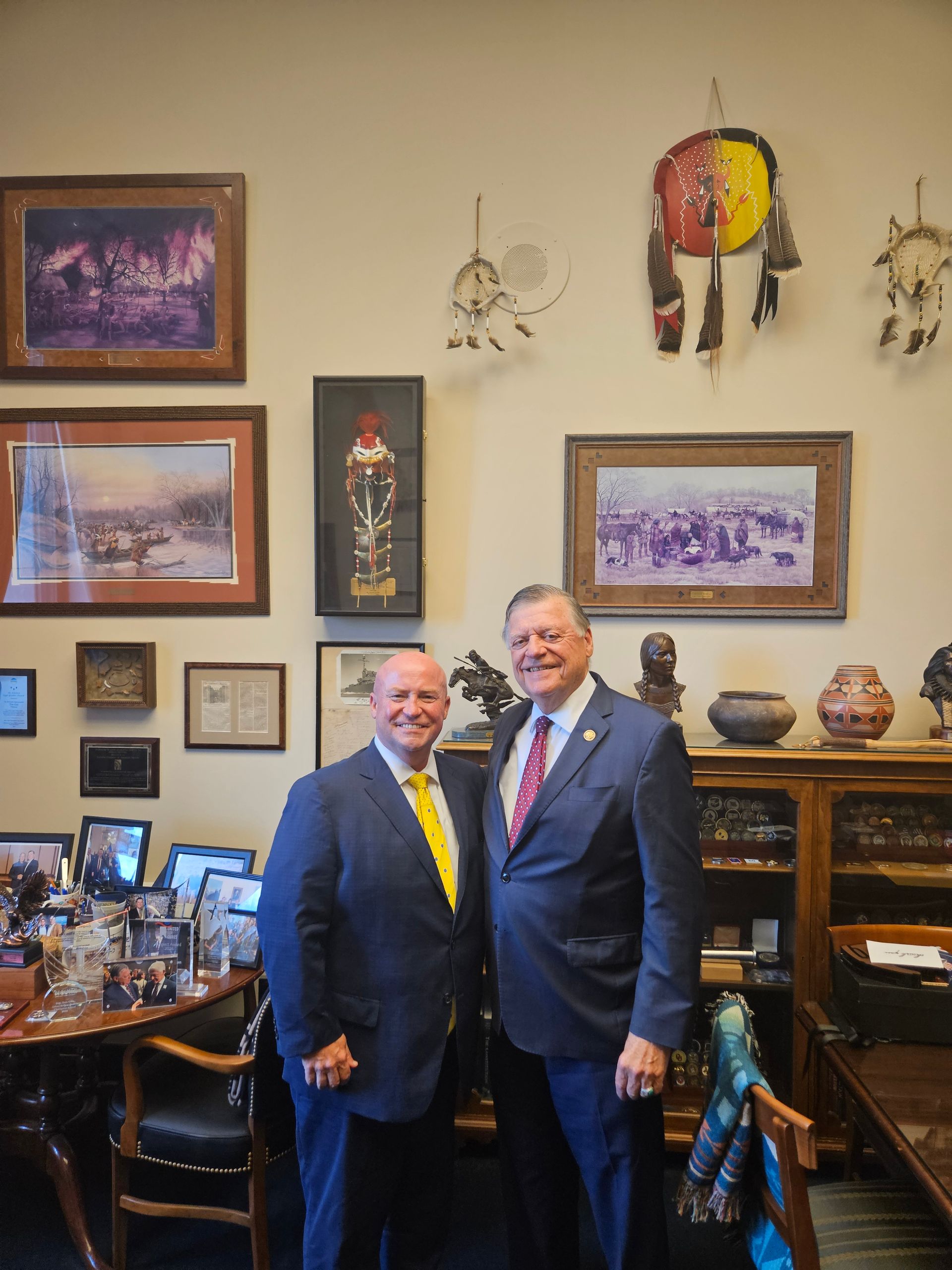
U.S. Rep. Tom Cole, R-Oklahoma (right) visits with Joe Dorman, CEO of the Oklahoma Institute for Child Advocacy in the congressman’s Washington office. Dorman made the trip to the Nation’s Capital Sept. 14-16 as part of a group of advocates to visit with Oklahoma’s congressional delegation about ways to combat hunger in the state. (Courtesy Photo)
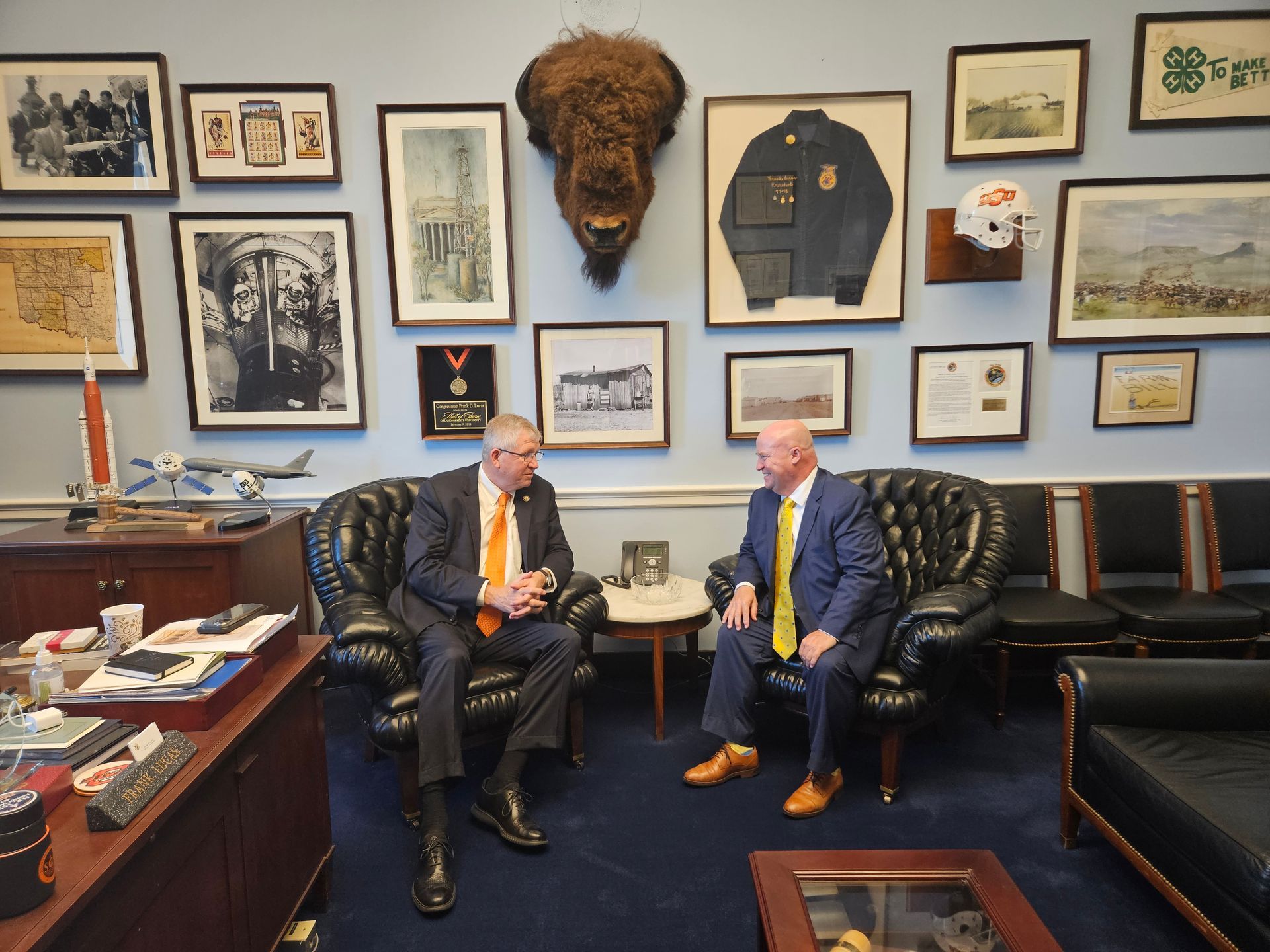
Joe Dorman, CEO of the Oklahoma Institute for Child Advocacy, visits with U.S. Rep. Frank Lucas, R-Oklahoma, (left) in the congressman’s Washington office during a trip to D.C. Dorman was in the nation’s capital with a group of Oklahoma advocates to discuss hunger issues with federal lawmakers. The trip occurred Sept. 14-16, 2026. (Courtesy Photo)
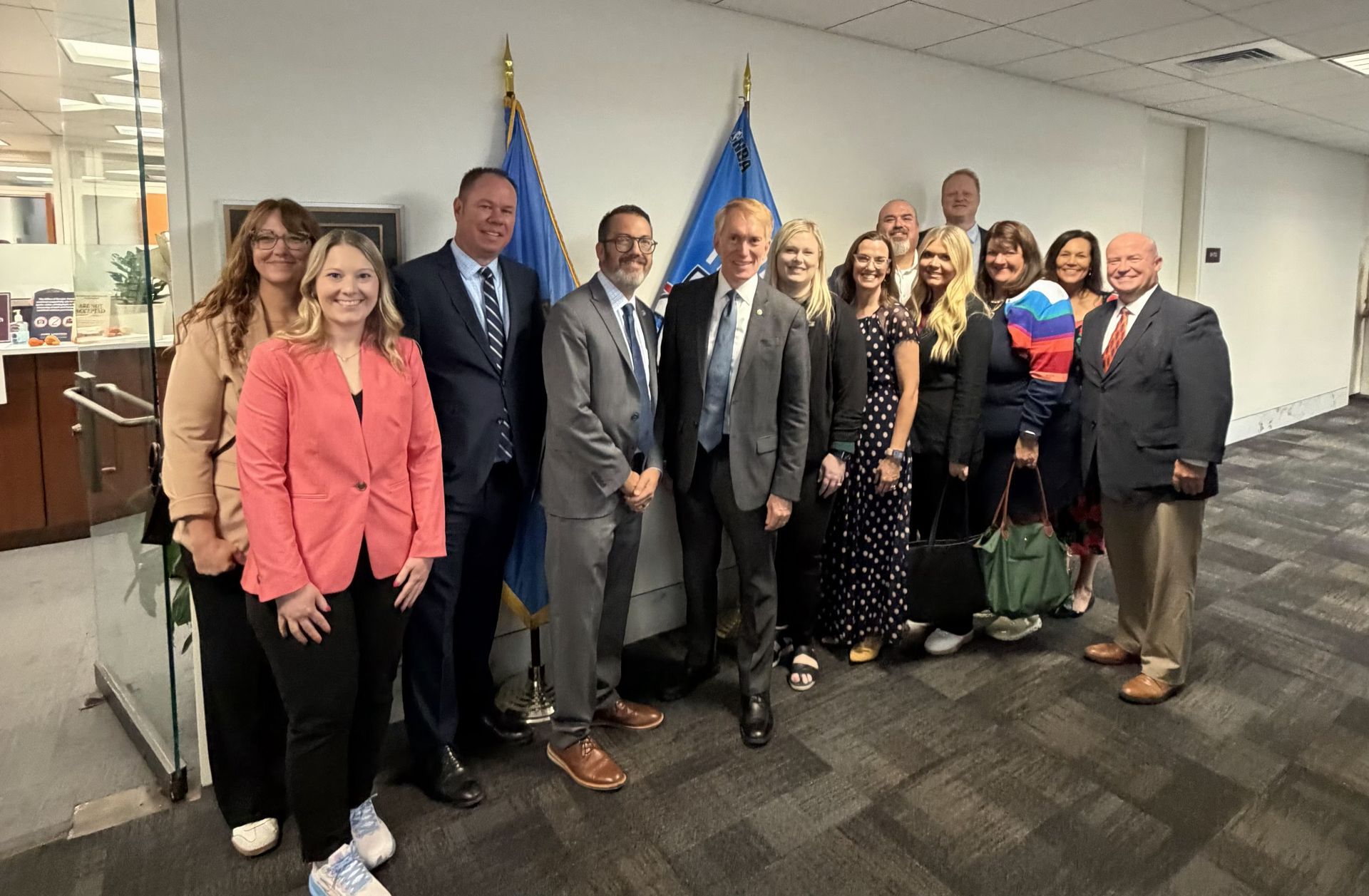
U.S. Sen. James Lankford, R-Oklahoma, (center) poses with a delegation of advocates from Oklahoma concerned about hunger in the state during a meeting in the Nation’s Capital. Among the group in D.C. during the week of September 17 was Joe Dorman, CEO of the Oklahoma Institute for Child Advocacy (Far Right). (Courtesy Photo)
Last week, I traveled to Washington, D.C., to meet with members of our federal delegation regarding issues created by federal mandates placed upon states to reduce error rates in the social safety net.
This “anti-hunger” gathering was organized by Hunger Free Oklahoma and included the Regional Food Bank of Oklahoma, the Eastern Oklahoma Food Bank, local providers of food support, and the Oklahoma Institute for Child Advocacy (OICA).
The “One Big Beautiful Bill” requires states to reduce paperwork errors to ensure Oklahomans fully qualify. This created backlogs in people calling help lines, confusion about what paperwork is needed, and growing frustration causing many individuals to simply give up on services.
Our trip showed the seriousness of the situation faced by hundreds of thousands of Oklahomans. I appreciate the members of the delegation who personally met with us and the dialogue we had with their staff members.
I am also thankful that Oklahoma Human Services (DHS), our state agency overseeing this, takes this seriously. DHS is working with OICA to help share information to assist Oklahomans on how to navigate the challenges created by the federal law and regain support.
Latest numbers show 943,377 Oklahomans are 60 or older, or about 23 percent of the state's population. By 2034, that population is projected to grow another 21.3 percent, and for the first time, adults 65 and older will outnumber children in the state.
Many older Oklahomans are called upon to care for younger generations, such as grandparents raising grandchildren. In Oklahoma, 109,221 children live in homes where a relative is the head of household, and 61,000 are being raised by kin with no parent present. More than 43,000 grandparents are the head of households and responsible for grandchildren living with them. For every child raised by kin inside the foster care system, 22 more are raised by kin outside of foster care, meaning most of this caregiving happens without any state involvement or support.
Oklahoma Human Services' Community Living, Aging, and Protective Services division has identified four significant challenges facing older Oklahomans: financial security, appropriate housing, the state's capacity to meet increasing service needs, and simply knowing how to find available help.
Much support happens through a network of local partners, including 11 Area Agencies on Aging across Oklahoma. For help, call the Statewide Aging and Disability Info-Line at 1-800-211-2116. Calls are routed to the appropriate local resource based on the caller’s needs.
The ADvantage Waiver is a critical part of support. This program helps eligible older adults and adults with disabilities receive long-term services and support at home rather than entering a nursing facility. Services can include personal care, case management, skilled nursing, home delivered meals, respite, home modifications, specialized medical equipment, and adult day health.
To qualify, individuals must meet financial requirements, the program's medical level of care requirements, and age or disability requirements. Eligibility is individualized. An online application is available through DHS. Anyone unable to complete it online can call 1-800-435-4711 to arrange a telephone application or visit a local DHS office.
After applying, applicants may need to verify citizenship or immigration status, income, other financial resources, and Social Security number. They will also select qualified providers in their area and complete a medical eligibility assessment.
Agency instructions tell applicants to respond within 10 calendar days of the postmark in any follow up letter, or the application cannot continue.
Medicare can be difficult to navigate, especially when comparing Medicare Advantage plans, prescription coverage, supplements, or programs designed to lower health care costs. The Oklahoma Insurance Department’s Medicare Assistance Program, known as SHIP, provides free, objective counseling from trained counselors: 800-763-2828.
2-1-1 and Be A Neighbor are avenues to seek help. By calling 2-1-1, navigators can assist with a variety of resources. Be A Neighbor is a statewide online resource directory where people can enter their ZIP code and search for assistance.
I will continue sharing information in coming weeks to assist in navigating these issues.