
Please Vote Early or on Tuesday, November 3rd
Tuesday, November 3rd is Election Day. In our 250th year as a nation and 119th year as a state, we have rarely achieved a voting percentage that reflects a majority of our population. We generally see about 50% of registered voters go to the polls.
In a state of more than four million residents, 2,263,724 people are registered; 53.6% (1,213,464) are Republicans, 25.1% (568,606) are Democrats, 20.3% (460,030) are Independent/Unaffiliated with a party, and less than 1% (21,624) are other parties like Libertarians. About one million are children who are unable to vote.
Many people question why the Oklahoma Institute for Child Advocacy (OICA) does not lean one way or the other politically. The answer is that as a nonprofit organization registered with the Internal Revenue Service (IRS), no 501(c)3 can participate in electioneering for candidates, just ballot initiatives.
OICA is here to work with those who win elections, not to influence their outcomes. It is our job to educate those officials about youth-related policies and work to pass laws and agency rules to improve conditions for all children.
One point of pride I take is that I can sit down with virtually anyone, no matter what their political or partisan views, and discuss policy and hopefully find common ground. I did that as a lawmaker, and I continue that today.
Since no one under the age of 18 can vote, OICA speaks up for those unable to cast a ballot to ensure their interest is represented. I believe almost everyone agrees we should do better for many aspects of child well-being. It is OICA’s job to work with policymakers to elevate that concept.
Looking at the conditions faced by far too many children across our state, I hope all levels of government will focus on children’s issues following the election. Based upon the turnout in our Primary Election and the subsequent Runoff Election this year, I believe voters will show up to the polls next week and cast their votes for those candidates who will want to attempt new ideas for improvements.
One issue on the ballot, State Question 847, would amend the Constitution to change the calculation of the fair cash value of property starting in tax year 2027 by:
- Reducing the annual growth limit of the calculated fair cash value of property from 5% to 4%.
- Reducing the annual growth limit of the calculated fair cash value of property that qualifies for a homestead exemption from 3% to 1.75%; and
- Repealing the prohibition on any increase in fair cash value of homestead property for those aged sixty-five or older whose income exceeds the median amount determined by the U.S. Department of Housing and Urban Development.
Opponents recognize this will reduce the funds collected to cover services for public education, along with county services, such as ambulance runs, libraries, and improving county roads. It is estimated that 62 of our 77 counties in Oklahoma operate primarily from property taxes. Should this question pass, it will limit revenue collections for these services.
While not as devastating as earlier plans to eliminate property taxes completely without creating an alternate revenue stream, this will still lessen future revenue for services which are already underfunded in many categories. It is important to note that all property taxes, especially school bond issues, have been approved by voters in the first place, including the current thresholds.
Both sides of the political spectrum believe they promote what is best for the state. One side wants to see fewer taxes placed on people, while the other side fears what a reduction in services will do to public operations.
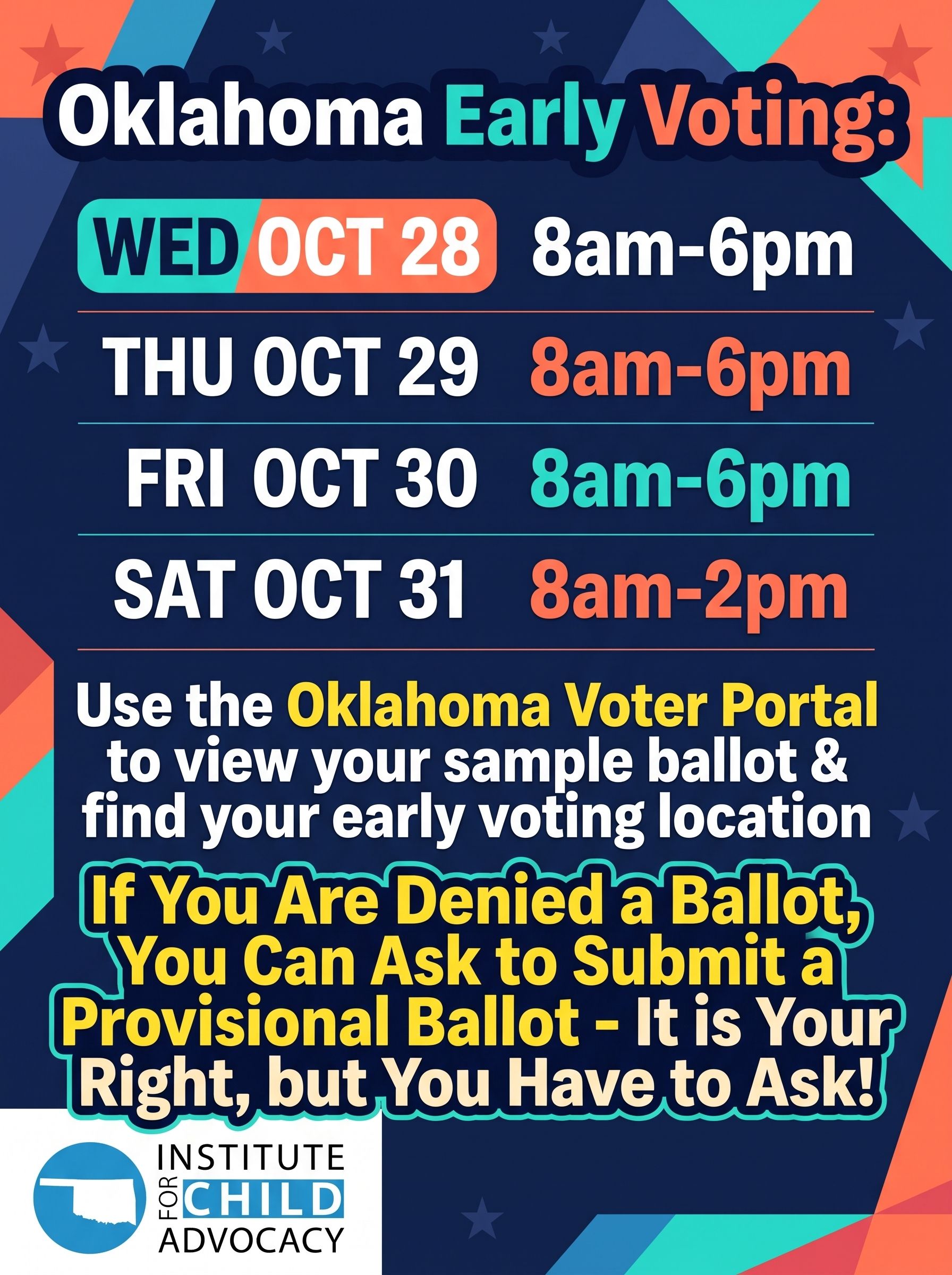
It is up to you, as a registered voter, to decide which pathway is best for our state, with this issue and each race. No matter what, please make sure your voice is counted on November 3 or by voting early at your county election board or early voting location.